Confident Kids Bundle: Emotional Strength Tools (Ages 3-5)
Confident Kids Bundle: Everyday Tools for Emotional Strength and Self-Esteem (Ages 3–5)
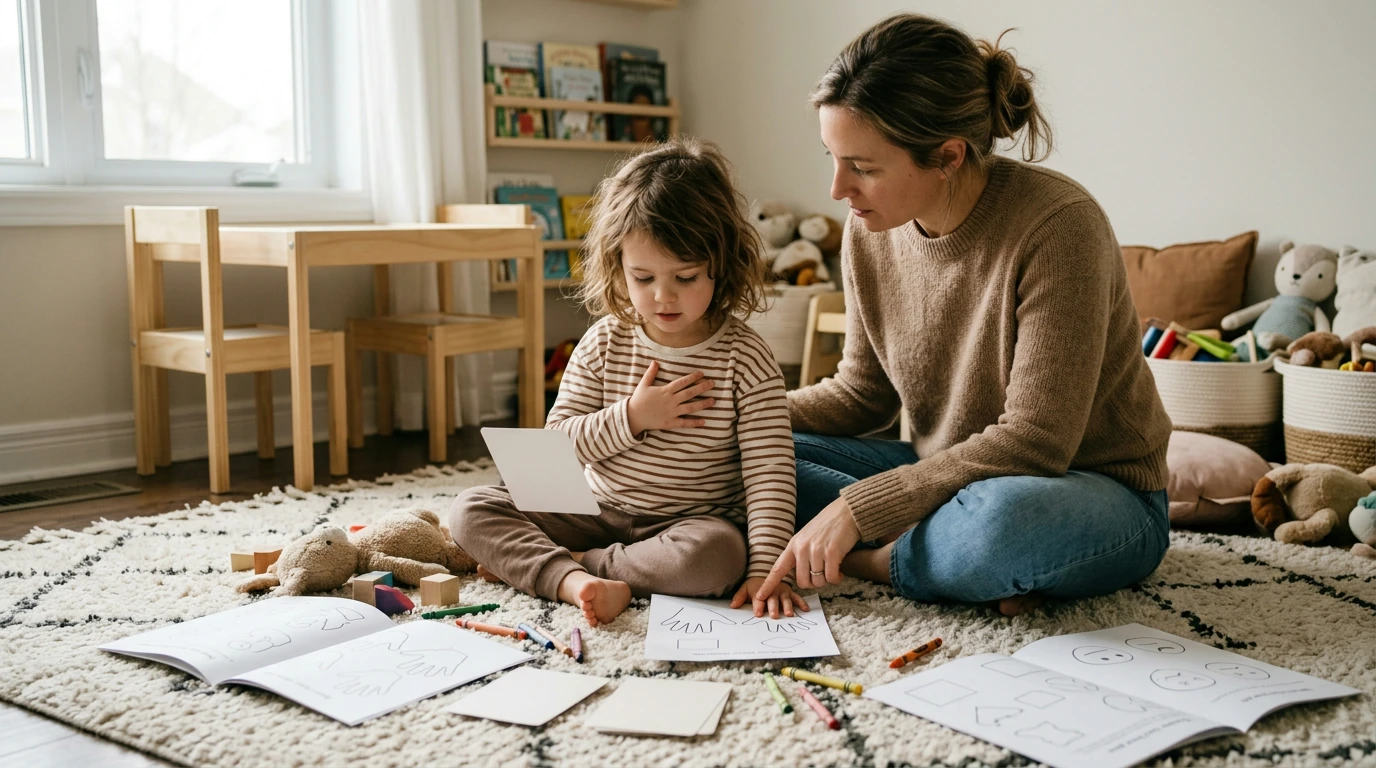
Big feelings are part of early childhood, but kids also need simple, repeatable ways to name emotions, calm their bodies, and rebuild confidence after setbacks. The Confident Kids Bundle: Nurturing Emotional Strength (3-in-1) pairs practical caregiver language with playful, age-appropriate self-esteem activities (ages 3–5) and a trackable emotional intelligence checklist. The goal is steady progress through everyday moments—without turning emotions into a “performance” or expecting preschoolers to self-regulate like older kids.
What “emotional strength” looks like for ages 3–5
For preschoolers, emotional strength is less about being calm all the time and more about learning what feelings are, what they do in the body, and what helps. Many skills are still “borrowed” from a trusted adult through co-regulation, which is developmentally appropriate. (For a helpful overview of typical preschool development, see the CDC developmental milestones (3–5 years).)
- Noticing body clues (tight tummy, hot face, wiggly hands) and learning basic emotion words.
- Recovering from small disappointments (a tower falls, a turn ends) with adult support and simple coping steps.
- Trying again after mistakes while hearing consistent, specific encouragement.
- Beginning empathy skills: noticing others’ expressions and practicing gentle responses.
- Building autonomy with small choices that reduce power struggles (two acceptable options).
What’s inside the Confident Kids Bundle (3-in-1)
This bundle is designed for short, repeatable use—so it fits real life: mornings, transitions, sibling conflict, and bedtime wind-downs. It combines three tools that work best together: a caregiver guide, child-friendly confidence routines, and a checklist that helps you stay consistent over time.
- Parenting guide: strategies for responding to big emotions, setting boundaries calmly, and using language that supports confidence.
- Self-esteem activities for ages 3–5: playful exercises that reinforce effort, identity, and strengths through simple prompts and routines.
- Emotional intelligence checklist: a trackable way to notice progress in labeling feelings, calming skills, empathy, and problem-solving.
Bundle parts and how they support daily routines
| Bundle piece | Best time to use | Skill supported | Example outcome to look for |
|---|---|---|---|
| Parenting guide | During conflicts or transitions | Co-regulation and boundaries | Fewer escalations; quicker return to calm |
| Self-esteem activities (ages 3–5) | Playtime or 5–10 minute “connection” moments | Confidence through effort and strengths | More willingness to try; less fear of mistakes |
| Emotional intelligence checklist | Weekly check-in | Awareness and consistency | Clearer patterns; targeted practice areas |
A simple weekly rhythm (without adding more to your plate)
Preschoolers learn through repetition, and caregivers benefit from a predictable plan that doesn’t require constant “new ideas.” A light weekly rhythm can turn emotional skill-building into a routine that feels doable.
- Pick one focus skill per week (naming feelings, waiting turns, calming hands) to avoid overwhelm.
- Use a consistent script: name the feeling, set the limit, offer a coping tool, then reconnect.
- Schedule a short daily connection ritual (5 minutes), device-free and child-led (blocks, drawing, pretend play).
- End the week with a quick checklist review to spot what improved and what needs more practice.
- Celebrate process, not outcomes: praise effort, strategies used, and trying again.
Self-esteem activities that fit ages 3–5
At this age, confidence grows from feeling safe, seen, and capable in small ways. The best self-esteem activities are short, playful, and specific—so kids can connect praise to what they actually did.
- “Try-Again” practice: normalize mistakes with a predictable phrase and a quick reset (one breath + “What’s next?”).
- Strength-spotting: name strengths you observe (“You kept going,” “You asked for help,” “You were gentle”).
- Choice-building: offer two good options to support autonomy while keeping boundaries intact.
- Role-play with toys: act out sharing, losing a turn, or calming down to rehearse skills before real moments.
- Bravery ladder: break a hard task into tiny steps and celebrate each step completed.
Emotional intelligence at home: practical skill-building
Emotional intelligence for preschoolers is mostly about building a foundation: simple vocabulary, safe limits, and repeated opportunities to repair after conflict. (For broader context on social-emotional growth, the American Academy of Pediatrics preschool resources and the CASEL core competencies are helpful references.)
Using the checklist without turning it into a scorecard
Who this bundle supports best
Helpful add-on: creating emotional “safe spots” at home
If you want a deeper, step-by-step approach for setting up supportive environments, consider A Guide to Safe Space Mapping as a companion resource.
Recommended resources (in stock)
- Confident Kids Bundle: Nurturing Emotional Strength | 3-in-1 Bundle | Parenting Guide, Self-Esteem Activities Ages 3–5, Emotional Intelligence Checklist
- A Guide to Safe Space Mapping | Digital Ebook on Understanding, Creating & Using Safe Spaces
FAQ
What age range is this bundle designed for?
The self-esteem activities are designed for ages 3–5, with caregiver strategies that often support nearby ages depending on your child’s development. If your child is slightly younger or older, the routines can still be useful when adapted to their language level and attention span.
How long does it take each day to use the activities?
Most families use the activities in short bursts—often 5–10 minutes during playtime or a daily connection moment. The scripts and calming tools also fit naturally into real situations like transitions, conflicts, and bedtime.
Can this help with tantrums and big feelings?
Yes—consistent emotion labeling, co-regulation, clear limits, and calming routines can reduce the intensity of big reactions and help kids recover faster. If tantrums are severe, increasing, or impacting sleep and safety, professional guidance from a pediatrician or child therapist can be helpful.












Leave a comment